Find mini active portable wireless speaker for Home, Stage, and Desktop
Source 30 mini active portable wireless speaker options with varying power, battery capacity, and connectivity features. Compare specifications like Bluetooth versions, playback times, and supported storage to select the right unit for home theatre, karaoke, or mobile use.
Key considerations
Products List


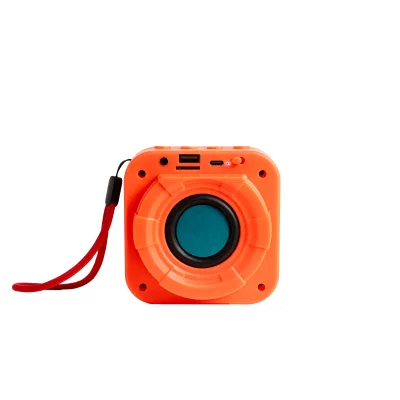
Comprehensive Sourcing Guide
Strategic Sourcing Guide for Mini Active Portable Wireless Speakers
The global demand for compact audio solutions has driven the mini active portable wireless speaker market to evolve rapidly. For B2B buyers, navigating this sector requires a disciplined approach that distinguishes between observed product attributes and generalized market claims. This guide synthesizes verified product data to establish a framework for sourcing, evaluating, and procuring these devices. The focus remains on technical feasibility, compliance verification, and supply chain stability, ensuring that procurement decisions are grounded in factual evidence rather than speculative marketing.
Technical Specifications and Performance Verification
When sourcing mini active portable wireless speakers, the primary objective is to align technical specifications with the intended application. The market offers a diverse range of configurations, and buyers must scrutinize the "Amplification Type" and "Sound Channel" to ensure the device meets performance expectations. Current product data indicates that the majority of units in this category utilize Active amplification, which integrates an amplifier within the speaker enclosure to drive the drivers directly. This is distinct from passive systems that require external amplification.
A critical differentiator in this segment is the sound channel configuration. While some units are designed for stereo separation, observed data highlights a prevalence of 2-channel systems optimized for specific form factors. The frequency response range is another vital metric. Buyers should expect to encounter units with a range of 100Hz-10kHz, which is suitable for voice and mid-range frequencies, or broader ranges extending to 20kHz for higher fidelity. However, the lower limit of 100Hz suggests that deep bass reproduction may be limited in these miniaturized enclosures, a trade-off inherent to the "mini" classification.
Connectivity standards have also matured. The Bluetooth Version is a key specification to verify. Current listings show a transition from Bluetooth 5.0 to 5.3, with the latter offering improved energy efficiency and connection stability. The effective distance for these connections is typically observed at 10 meters, which is standard for Class 2 Bluetooth devices. For users requiring extended storage, the "Extended Storage" attribute varies, with observed capacities ranging from 16GB to 32GB via USB or TF card support. Buyers must confirm that the specific model supports the desired file formats and storage limits before placing an order.
Power Management and Battery Architecture
Power management is a defining characteristic of portable wireless speakers. The "Power Source" can vary between battery-only operation and USB power supply, influencing the device's portability and usage scenarios. For battery-operated units, the "Battery Capacity" is a primary driver of performance. Observed data reveals significant variance in capacity, with some models featuring 1200mAh or 1800mAh batteries, while others utilize smaller 300mAh or 800mAh cells. This variance directly impacts the "Playing Time," which ranges from 2 hours to 3.5 hours or even 3-4 hours depending on the volume and usage conditions.
The "Speaker Power" and "Output Power" specifications also correlate with battery life. Units with an output power of 7W or 10W typically consume more energy than those rated at 3W. Buyers should note that the "Charge Time" is generally observed at 3 hours, a standard benchmark for modern lithium-ion battery systems in this form factor. Additionally, if the product includes a microphone for karaoke or hands-free calling, the "Microphone Battery Capacity" is a separate specification, often listed around 500mA, which must be factored into the total power budget.
To ensure longevity, buyers should verify the "Waterproof Rating." Observed data includes an IPX3 rating, which protects against water spray from any direction but does not imply submersion resistance. This is crucial for outdoor or mobile portable applications where environmental exposure is a risk.
Compliance, Certification, and Regulatory Standards
In the B2B procurement of electronic goods, compliance is non-negotiable. While specific product listings may not always display certification logos, buyers must verify that the supplier adheres to international safety and environmental standards. The background data suggests that ROHS compliance is a relevant consideration for this product category, ensuring that the device is free from specific hazardous substances.
Furthermore, quality management systems are essential for consistent manufacturing. Buyers should request evidence of ISO 9001 certification, which validates the supplier's quality management processes. Environmental management standards like ISO 14001 and social compliance certifications such as BSCI are also valuable indicators of a supplier's commitment to ethical and sustainable practices. However, these should be treated as verification targets rather than assumed facts. Buyers must explicitly request current certification documents and test reports to confirm that the specific batch of products meets these standards.
Cost Drivers and Pricing Dynamics
The pricing of mini active portable wireless speakers is influenced by several factors, including component quality, battery capacity, and customization options. The observed listed price range in the market spans from $1.01 to $23.00, reflecting a wide spectrum of product tiers. Lower-priced units often feature smaller batteries, lower output power, and basic Bluetooth versions, while higher-priced models may offer advanced connectivity, superior build quality, and extended battery life.
The "MOQ" (Minimum Order Quantity) is another significant cost driver. The observed range extends from 1 unit to 10,000 units. For buyers seeking custom branding, the "Custom Logo" requirement typically mandates a minimum order of 3000 pieces. This threshold is critical for budget planning, as the per-unit cost often decreases significantly as the order volume approaches or exceeds this customization threshold. Buyers should also consider the "Packing List" and "Product Weight" when calculating logistics costs. A unit weighing 0.13kg versus one weighing 0.487kg will have vastly different shipping implications, especially when shipping large quantities.
Supplier Evaluation and Operational Capabilities
Selecting the right supplier requires a deep dive into their operational capabilities and production standards. The "Product Origin" is a key indicator of supply chain maturity, with Guangdong being a prominent manufacturing hub for these electronics. This region offers a robust ecosystem of component suppliers and assembly lines, which can facilitate faster lead times and better quality control.
Buyers should evaluate the "Production Standard" and packaging specifications. For instance, some units are packed in Color Boxes with specific dimensions, while the bulk shipping standard might be 50PCS per carton with defined dimensions and weight (e.g., 20KG). Understanding these logistical parameters is essential for warehouse planning and cost estimation. Additionally, the "Mode of Operation," such as Key Presses or Touch Control, should be verified against user experience requirements. The "Compatible Product" attribute is often listed as Universal, but buyers should confirm physical compatibility with the intended devices, such as Mobile Phones, Tablets, or Stage/DJ equipment.
Quality Control and Long-Term Procurement Strategy
Implementing a robust quality control (QC) strategy is vital for maintaining brand reputation. Given the variance in observed specifications, such as the difference between 2-hour and 3.5-hour playing times, buyers must establish clear acceptance criteria. This includes verifying the "Frequency Response Range" and "SNR" (Signal-to-Noise Ratio), which is observed in the 70-80dB range for many units.
For long-term procurement, buyers should consider the "Customization" availability. The ability to customize the product, including the Custom Logo, allows for brand differentiation. However, this requires a clear understanding of the lead times and the MOQ of 3000PCS. Buyers should also plan for the "Product Weight" and "Dimensions" (e.g., 9085.790.5mm) to ensure the final product fits the intended retail packaging and marketing claims.
Finally, the "Support" features, such as USB/TF/Bt/Fmauxlkaraoke/Tws/Magic, should be tested in real-world scenarios. The "Packing List" must be accurate, typically including the Speaker, Manual, Charging Cable, and Audio cable. By rigorously verifying these attributes against the supplied product data, buyers can mitigate risks and ensure a successful procurement cycle.
Comparative Analysis of Key Product Attributes
To facilitate decision-making, the following table summarizes the key observed attributes across different product models found in the market. This comparison highlights the variance in specifications that buyers must navigate.
| Attribute | Model TG359 | Model F90 | Model A10 |
|---|---|---|---|
| Bluetooth Version | 5.0 | 5.3 | Not Specified |
| Battery Capacity | 1200mAh | 1800mAh | 300mAh / 800mAh |
| Playing Time | 2 Hours | 3.5 Hours | 1-2 Hours / 3-4h |
| Output Power | 10W | 3W | Not Specified |
| Frequency Response | 100Hz-10kHz | 100Hz-20kHz | Not Specified |
| Product Weight | 0.4kg | 0.13kg | Not Specified |
| Extended Storage | 32GB | 16GB | Not Specified |
| Waterproof Rating | Not Specified | IPX3 | Not Specified |
| Custom Logo MOQ | 3000 PCS | 3000 PCS | 3000 PCS |
This table illustrates that while the core function remains consistent, the performance metrics vary significantly. A buyer prioritizing battery life might select the F90 model, whereas one needing higher output power might lean towards the TG359. The "Custom Logo" MOQ remains consistent at 3000 PCS across the observed models, indicating a standard industry threshold for branding.
Conclusion
Sourcing mini active portable wireless speakers requires a meticulous approach that balances technical specifications with commercial realities. By focusing on verified attributes such as Bluetooth Version, Battery Capacity, and Output Power, buyers can make informed decisions that align with their market needs. The observed data underscores the importance of verifying compliance with standards like ROHS and ISO 9001, as well as understanding the cost implications of MOQ and Customization. With a clear understanding of these factors, B2B buyers can navigate the complex landscape of portable audio electronics, ensuring a supply chain that is reliable, compliant, and cost-effective.
FAQs
What is the typical playing time for these speakers?
Playing time ranges from 2 hours to 3.5 hours depending on the model and battery capacity. Units with 1200mAh batteries often last 2 hours, while those with 1800mAh can reach 3.5 hours of continuous playback.
Which Bluetooth versions are available for these devices?
Available Bluetooth versions include 5.0 and 5.3, offering stable connections up to 10 meters. The newer 5.3 version provides improved energy efficiency and connection stability compared to the 5.0 standard found in other models.
Can I customize the logo on these speakers?
Yes, custom logo customization is available but requires a minimum order of 3000 pieces. This threshold applies across the observed models, ensuring that branding efforts are economically viable for bulk procurement.
How much does the output power vary between models?
Output power varies significantly, with observed ratings of 3W, 7W, and 10W depending on the specific unit. Higher power models like the 10W variant typically consume more energy and may have shorter battery life.
What is the minimum order quantity for these speakers?
The minimum order quantity ranges from 1 unit to 10000 units depending on the supplier and customization needs. Standard orders can start as low as one piece, while custom branding requires a minimum of 3000 pieces.
Where are these speakers typically manufactured?
Most units are manufactured in Guangdong, a major hub for electronic component assembly and speaker production. This location supports a robust supply chain with established logistics for bulk shipping and quality control.